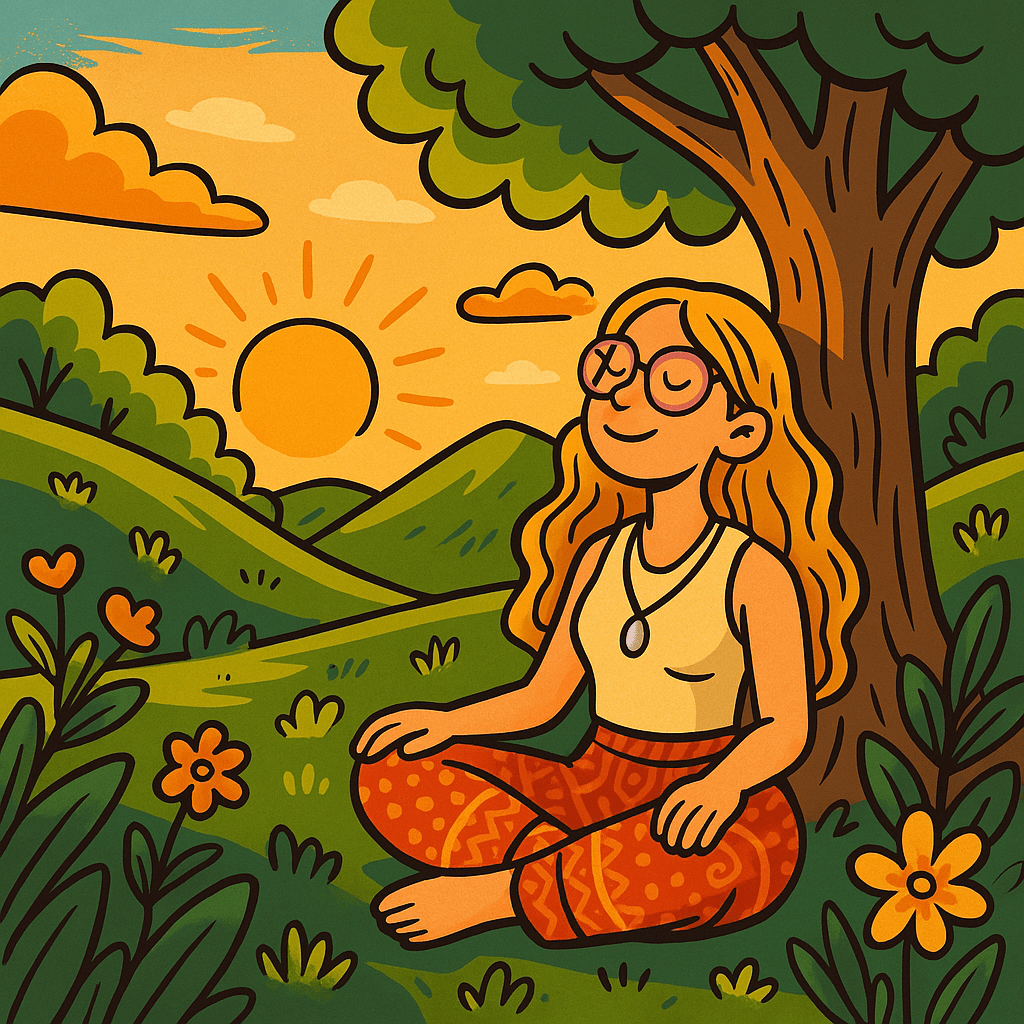
When you think of meditation, you might picture someone sitting cross-legged in silence, eyes closed, mind completely blank. And if that’s not you, it can be easy to think, “I guess I’m just not the meditating type.”
But here’s the truth, meditation isn’t about clearing your mind or reaching some mystical state. It’s not reserved for monks or deeply spiritual people. In fact, many of us are already meditating- we just don’t call it that.
Science now shows that meditation isn’t one rigid practice—it’s a spectrum of ways we train our attention, regulate our nervous system, and reconnect with the present moment. Even a few slow breaths, a walk without your phone, or quietly noticing your thoughts without judgment—that’s meditation.
And it matters more than ever. In a world that’s constantly pulling our focus outward, meditation helps us return to ourselves. It reduces stress, calms the nervous system, improves emotional regulation, and deepens self awareness. It’s not about escaping life, its about meeting it fully, with presence.
This post is here to bust the myths, drop the pressure, and help you realize: you already have what it takes.
What We’ve Been Told And Why It’s Misleading
Over time, meditation has become wrapped in a lot of expectations, some of which make it feel inaccessible or intimidating. Here are a few of the most common myths you may have heard (or believed yourself)
You have to clear your mind: This is probably the biggest one. But the mind is not meant to be empty—it’s meant to be observed. Meditation isn’t about stopping thoughts, but about noticing them without getting caught up in them.
You have to sit in silence for a long time: While some people enjoy this style, it’s not the only way. Movement based practices, mindful walking, journaling, or even guided meditations are equally valid and powerful.
You have to feel peaceful right away: Meditation doesn’t always feel good in the moment. Sometimes it brings up discomfort- and that’s okay! That’s part of the healing and unwinding.
These ideas came from a mix of cultural misunderstanding, spiritual elitism, and well-intentioned but narrow teachings. But the truth is, meditation is for humans, not just sages. And we’re allowed to redefine it in a way that honors our lives, our bodies, and our minds.
Ways To Meditate That Might Surprise You
If traditional meditation hasn’t worked for you, you’re not alone. The good news is: there are so many ways to meditate- and many of them don’t look like meditation at all.
Meditation is any moment you bring your awareness fully to the present without judgement. That means it can look like:
Taking a slow walk without your phone, simply noticing your steps and breath.
Washing dishes while fully feeling the water and movement.
Journaling as a way to witness your thoughts instead of drowning them.
Sitting with your hands on your heart and breathing deeply for 2 minutes.
Repeating an affirmation or mantra while gently swaying or stretching.
Listening to calming music and noticing every layer of sound.
Observing nature- the wind in the trees, a candle flame, the rhythm of rain.
These practices are just as valid as sitting cross-legged on a cushion. What makes something meditation isn’t how it looks—it’s how it feels. It’s the presence you bring to it.
You might already be meditating without realizing it—and now you have permission to claim it as sacred.
Meditation Is Yours Now
You don’t need special music, incense, or an hour of silence to meditate. You don’t need to be a yogi or a monk. You just need a moment- and a willingness to meet yourself there.
Meditation is not about escaping your life. It’s about being more alive within it. More aware. More connected. More you.
Whether you’re sitting quietly, walking slowly, breathing deeply, or writing your heart onto a page—if you’re doing it with presence and love, it counts.
So, release the pressure. Drop the image. Your version of meditation is allowed to be simple, imperfect, and yours.
Try meditating today—in your own way. Let it be gentle. Let it be enough. Let it be you.
Unlocking the Self: How Astrology, Tarot, and Other tools Guide Us Home
Discovering the True Self can be one of the most profound and rewarding experiences a soul can have on Earth. This journey of self-remembering is deeply personal, yet woven with universal themes that connect us all. Each awakening unfolds in its own way, guided by the unique callings of the soul. Some are drawn to the stars, seeking wisdom in the cosmic language of astrology. Others find meaning in symbols, archetypes, or intricate energetic systems.
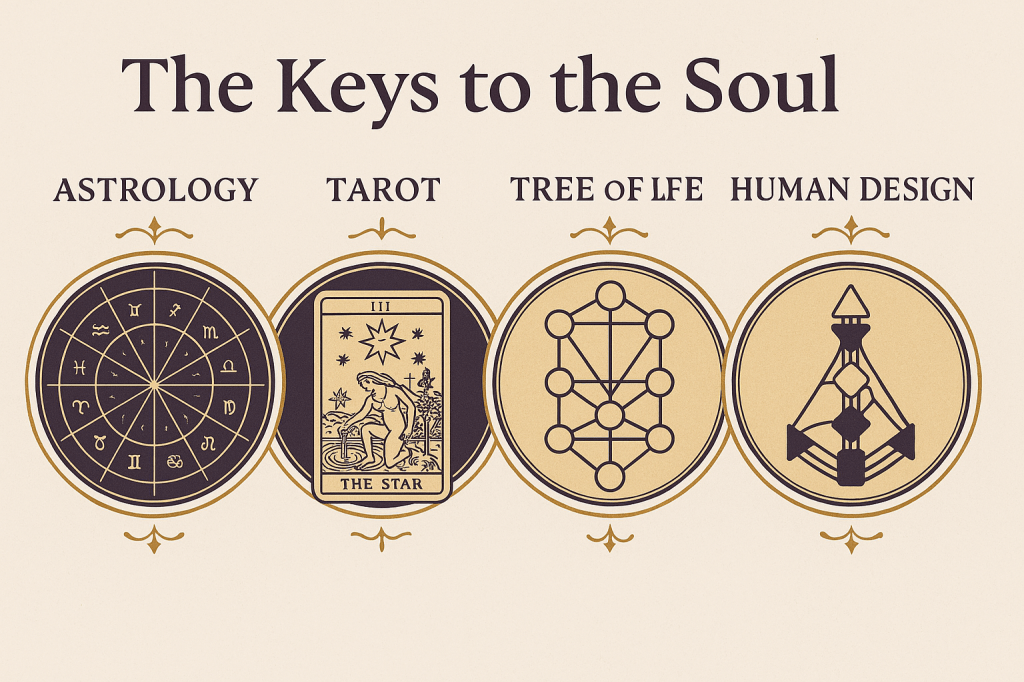
We are fortunate to live in a time when countless tools exist to assist in this sacred process. Whether you feel pulled toward Astrology, Tarot, Human Design, or the Tree of Life, the path you choose is not random—it is resonant, a reflection of what your soul is ready to explore. These tools may seem different on the surface, yet they all serve the same purpose: to guide you back to the truth that has always been within you.
You are already whole. You are oneness. This journey is simply about remembering.
The Role of Self-Actualization Tools
Self-actualization is not a neat, linear process—it’s a profound unraveling. As you begin to awaken to deeper truths, you may experience a whirlwind of emotions that feel impossible to make sense of in the moment. The beliefs you once held true may begin to crumble. People you thought you knew may reveal layers you never noticed before. You may suddenly feel drawn to ideas, practices, or perspectives that once seemed foreign to you. And perhaps most disorienting of all, you might find it harder to relate to those around you, as if you’ve stepped into a new reality while others remain unchanged.
During this time of transition, it’s natural to feel isolated or untethered, longing for a guiding hand to help you make sense of it all. Not everyone has a mentor to walk beside them on this path, but thankfully, we live in a time where self-actualization tools exist as maps for the inner landscape. Whether through astrology, tarot, humans design, or the Tree of Life, these tools offer a language for understanding the changes you’re experiencing and a structure to help you navigate the unknown.
I remember how isolating it felt when I first began the process of exploring my shadow—peeling back layers of conditioning and shining light on the parts of myself I had long ignored, like buried treasures waiting to be unearthed. Each revelation was both daunting and exhilarating, a dance between fear and curiosity. There were few people I could openly discuss this profound journey with, and I often felt as though I was wandering in unfamiliar territory, surrounded by a dense fog of confusion and uncertainty, with no one to confirm that what I was experiencing was real or valid. In those moments, I yearned for connection, for someone who understood the complexity of my feelings and the significance of my discoveries, yet there was a deep-rooted belief that this journey was mine alone, a path I had to tread without a map or guide.
Then, by chance—or perhaps by fate—I stumbled upon something that changed everything for me. As I was scrolling through TikTok, I came across a fascinating series of “collective tarot readings” that instantly captivated my attention. The concept that I could find out how someone truly feels about me, essentially deciphering their emotions and thoughts, was both exhilarating and intimidating. Tarot was not entirely new for me; my brother had been a practitioner for years, often sharing anecdotes about his readings, and I had always been somewhat familiar with Astrology through him. However, despite this exposure, I had never felt the compelling urge to explore the Tarot for myself—until that moment. It was as if the universe was nudging me to dive deeper into this mystical realm, to unravel the threads of my own destiny and relationships. The allure of understanding hidden emotions and insights sparked a curiosity that I couldn’t resist, prompting me to embark on a journey of self-discovery and connection that I had never anticipated.
The moment I began studying tarot, something clicked within me, igniting a spark of curiosity that had long lain dormant. For the first time in my life, I understood how people could truly fall in love with learning, and this revelation was transformative. I was utterly fascinated, not just with the cards themselves, each uniquely adorned with symbols and stories, but with the way they seemed to reflect back pieces of myself I hadn’t been able to articulate before. It was as if these cards held up a mirror to my innermost thoughts and feelings, revealing hidden fears and dreams that I had barely acknowledged. I found myself eagerly returning to my books and my cards, immersing myself in the rich history and philosophy behind each reading, as if I had uncovered a hidden doorway into my own soul. Every session felt like a deep dive into an ocean of wisdom and insight, where every card drawn unfolded new layers of understanding and self-discovery. The process became a cherished ritual, where intuition intertwined with knowledge, crafting a narrative that was as enlightening as it was empowering.
At first, I used tarot to understand how others perceived me, seeking clarity on relationships and connections. But as I deepened my practice, I realized the true power of this tool wasn’t in reading others—it was in reading myself. Tarot became a mirror, helping me navigate the ever-changing terrain of self-discovery. It showed me I wasn’t alone or lost; I was simply unfolding, layer by layer. And most importantly, it gave me the confidence to keep going.
The Tools & Their Unique Perspectives
Astrology: The study of celestial bodies—such as the Sun, Moon, and planets—interacts with and influences human life based on their positions in the sky at any given time. It operates on the principle that the universe is interconnected, meaning the movement of the planets reflects patterns in our personal and collective experiences. The purpose of astrology is to offer insight into an individual’s personality, life path, and potential challenges and strengths. It acts as a tool for self-awareness, helping people align with their unique nature and navigate life with greater understanding. Many also use astrology to time important events, understand relationships, and gain a broader perspective on spiritual growth and purpose. Ultimately, astrology provides a structured and comprehensive framework for understanding oneself and one’s life journey.
Tarot: Tarot is a symbolic and intuitive system that serves as a mirror for the subconscious mind, guiding individuals toward self-awareness, transformation, and spiritual evolution. Unlike astrology, which maps a cosmic blueprint, tarot speaks in archetypal language, revealing insights about the present moment and the deeper layers of the psyche. Tarot is not about external fate—it’s about internal alignment. It helps the seeker recognize the archetypal energies influencing their life and invites them to actively shape their reality. It is a tool of self-dialogue, reflection, and transformation, making it one of the most personal and profound systems for self-actualization.
Human Design: Human Design is a self-actualization tool that combines astrology, the I Ching, the Kabbalistic Tree of Life, the chakra system, and quantum physics to reveal how an individual’s energy is designed to operate in the world. Unlike tarot, which reflects the subconscious, or astrology, which maps cosmic influence, Human Design is about mechanics—how energy flows through the body and interacts with others. It is a system for practical alignment, offering specific guidance on how to make decisions, manage energy, and fulfill one’s purpose with ease rather than resistance. Human Design is like a user manual for your soul’s energy—it won’t tell you what will happen, but how to best navigate life in alignment with your true self.
The Tree of Life: The Tree of Life is a mystical framework that serves as a blueprint of the Universe, consciousness, and the human soul’s journey back to divine unity. Unlike astrology (which maps planetary influence), tarot (which speaks through archetypes), or Human Design (which guides energy mechanics), the Tree of Life is a sacred map of spiritual evolution, providing a structured way to understand divine wisdom, personal transformation, and the bridge between the material and spiritual worlds. Rooted in Kabbalistic tradition, the Tree of Life is composed of 10 Sefirot (spheres of consciousness) and 22 connecting pathways, each representing a specific aspect of existence, divine intelligence, and the unfolding of self-actualization.
Which one is for you? (Maybe all of them!)
If you feel drawn to explore your spiritual journey on a deeper level—whether you’re just beginning, have always been curious about these tools, or are looking for something new to expand your understanding—trust that calling. Your intuition knows the way.
Let yourself be guided by what sparks curiosity and excitement within you. If a particular tool resonates—whether it’s astrology, tarot, human design, or the Tree of Life—follow that thread. Engage with it, explore it, and see where it leads. If something feels confusing, overwhelming, or simply doesn’t click, that’s okay too. Self-actualization isn’t a rigid path, and there is no “right way” to navigate it.
The more important thing is to listen to yourself, as your intuition serves as a guiding compass through life’s intricate journey. Pay attention to the signals your body and energy give you, for they often provide invaluable insights about your emotional and spiritual state. Excitement is a powerful indicator of alignment, frequently appearing when you are on the right path, while frustration or confusion may be gently nudging you toward a different direction or prompting you to reevaluate your goals and priorities. It’s essential to recognize that these emotions are not inherently good or bad; rather, they are signals that can lead you to deeper self-understanding. And if a tool doesn’t resonate now, it might later—our understanding unfolds in layers, much like the petals of a flower, and we may find ourselves returning to what we were ready for in the right time, having gained new perspectives and insights. Embracing this journey of self-discovery and allowing yourself the grace to evolve is a crucial aspect of personal growth.
You are never alone in this process. There is always energy guiding you, supporting you, and pushing you toward deeper understanding. And in this vast, interconnected world, there are countless kindred spirits walking similar paths. If you ever have questions or feel the need for connection, seek out those who share your curiosity. The internet, for all its distractions, is also an incredible tool—a mirror reflecting the infinite ways we can learn, grow, and remember who we are.
Most of all, trust yourself. Your journey is uniquely yours, and every step—no matter how small—is leading you home.
The Path Leads Inward
No matter which tool you choose, the journey of self-actualization always leads to the same destination – yourself. Astrology, Tarot, Human Design, and the Tree of Life are all guides, maps that help us navigate the vast terrain of who we are. But no map can replace the experience of walking the path itself.
As you explore these tools, you may come to realize that the answers you seek were never outside of you—they were always within, waiting to be remembered. The journey of self-discovery can be profound, filled with moments of introspection and clarity that unveil the depths of your wisdom. Often, we search externally for solutions, forgetting that the source of insight lies within our own experiences and intuition. And this is where the true work begins: learning to be present with yourself, embracing each thought and feeling as they come, cultivating a deep sense of awareness and acceptance that allows you to reconnect with your authentic self. Through this process, you may find a newfound strength and resilience, equipping you to face life’s challenges with confidence and grace.
Meditation is one of the most profound ways to integrate what you uncover on this journey. It’s a space where insights settle, where the noise quiets, and where you can hear the voice of your own soul. Yet, many people hesitate to begin because of misconceptions about what meditation is supposed to look like.
In my next post, I will explore the infinite ways to meditate—how it doesn’t have to be about silencing the mind or achieving some mystical experience, but simply about being with what is. Because sometimes, the greatest realization of all is that you don’t have to search— you only have to be.
What if the dreams you had as a child weren’t just fantasies…but glimpses into your true path?
From a school notebook, I was five years old.
As children, we are deeply connected to our souls blueprint before conditioning takes over.The things we are drawn to, obsessed with, or dreamed about hold clues to what we are meant to do. When we look back at what fascinated us, what we naturally did without effort, we begin to trace the line of our destiny.
Neurologically, children operate mostly in theta brainwave states (0-7 years old) which are the same states accessed in deep meditation and hypnosis. This means children are in a highly receptive, intuitive, and imaginative state, deeply connected to pure inspiration and innate knowing. Their minds are like sponges, absorbing information and experiences without the filters that often develop as we age. As we grow older, societal expectations, and self-doubt often make us dismiss these childhood dreams as “impractical,” but those early fascinations weren’t random. They served as glimpses into what could be possible, an untainted vision of creativity and potential that many adults, burdened by responsibilities and skepticism, struggle to reclaim. Encouraging children to nurture these imaginative pursuits can lead to innovative thinkers and problem solvers of the future, highlighting the importance of preserving that magical connection to their innate curiosity and desires. By understanding and valuing this unique way of thinking, we can bridge the gap between childhood wonder and adult pragmatism, fostering environments that celebrate creativity and exploration rather than stifling them.
Think back to your childhood—what lit you up? What did you pretend to be? What did you spend hours doing? Those weren’t just games; they were signs! If you pretended to be a teacher, leader, or storyteller, those gifts are still inside you! If you loved being in nature, working with animals, or talking to spirits, that connection is still calling you back.
As a child, I spent time outside, mixing grass and dirt and pretending I was creating potions in my cauldron. I danced freely and often and sang whenever I felt called. This wasn’t just my imagination getting away with me; it was a remembering! My younger self already knew who she was, and so did you. There is now such a clear line connecting what fascinated me as a child to my purpose here on Earth. The more I connected with that young witch, the more I remembered the oneness inherent in all things.
Your childhood dreams weren’t random. They were the whispers of your soul, reminding you of who you truly are and the passions that lit up your spirit before the world introduced its limitations. It’s never too late to follow them, regardless of how far away you may feel from that innocent sense of wonder. If you feel disconnected from that part of yourself, start small and be gentle with your journey back. Ask your younger self what they loved, what made them feel alive and free, and allow those memories to surface. Let yourself daydream again, free from the constraints of adult responsibilities. Create, play, explore—without judgment or fear of failure. Engage with hobbies that once brought you joy, read stories that spark your imagination, or even try new creative outlets that you’ve been hesitant to explore. The more you honor your inner child, the more clearly you’ll hear their voice guiding you back home to yourself, illuminating the path to fulfillment and joy that you’ve long overlooked. Embrace this journey of rediscovery, for it holds the key to a vibrant and authentic life.
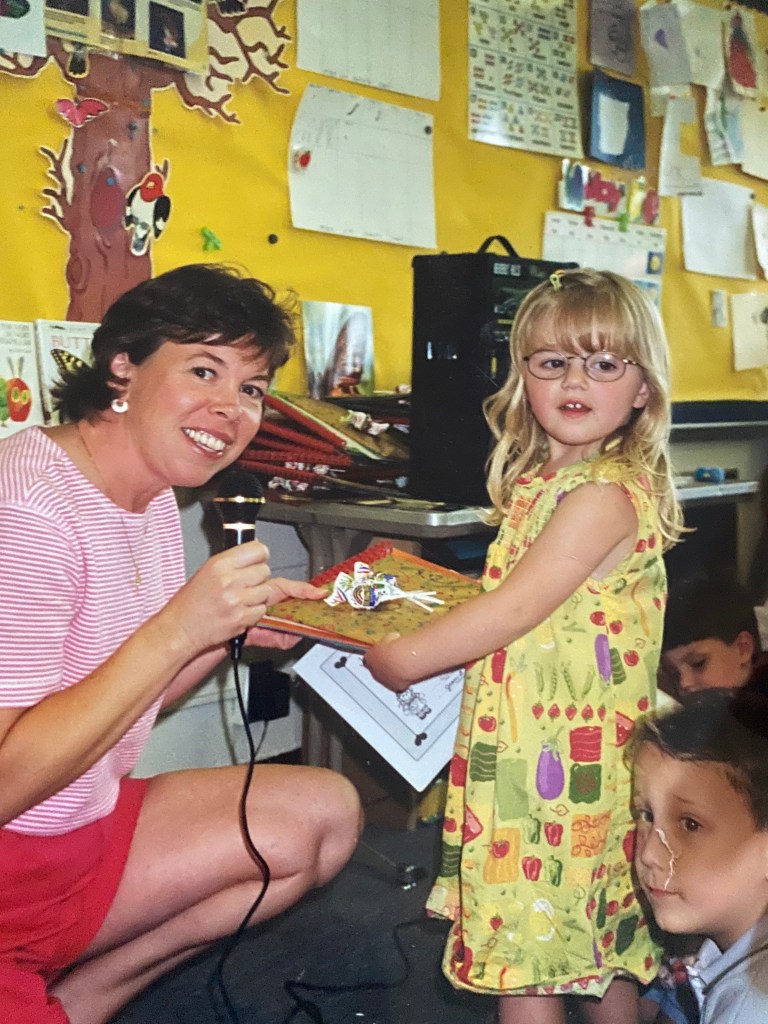
Me, at my preschool graduation where they asked “what do you want to be when you grow up?” and I answered: “Barbie”

 Sacred Pathways