Tag: love

  • Learning to Die Well

    Embracing Endings, Change, and the Sacred Art of Becoming
    How Humans Relate to Death

    Most of us have been taught to fear death long before we ever face it. Not just the death of the body, but the quieter kinds too. The death of who we used to be, the version of Life we have imagined, the relationships that no longer fit. And yet, instead of honoring these endings, we cling. We call it loyalty, responsibility, stability.. but really, its fear.

    We don’t fear death because it ends something, we fear death because it asks us to surrender control.

    Somewhere along the way, we made death the enemy. We turned it into something cold and tragic instead of sacred and transformative. We built a world that celebrates birth, success, and new beginnings, but rarely teaches us how to sit inside an ending with reverence. We hide death in hospital rooms, behind closed doors, in unspoken conversations and silent grief. The same way we avoid physical death, we avoid change. We avoid the kind of choices that would require a part of us to die. The job we’ve outgrown, the relationship that no longer feels like home.

    Whether we invite it in or not, death is already present in our lives. In every season. In every leaf. In every breath, where we are asked to exhale before we can inhale again.

    “There is no ending… Only change of form. Change of illusion.” – The Law of One, Ra.

    What if death isn’t something that happens at the end of life? What if it’s happening every time we choose honesty over pretending, truth over comfort, spirit over ego?

    This is why we fear it. Because some part of us knows. Every time we choose to grow, something must be left behind. And were not just grieving what were losing, were grieving who we were inside it.

    Death Isn’t Just the Final Breath

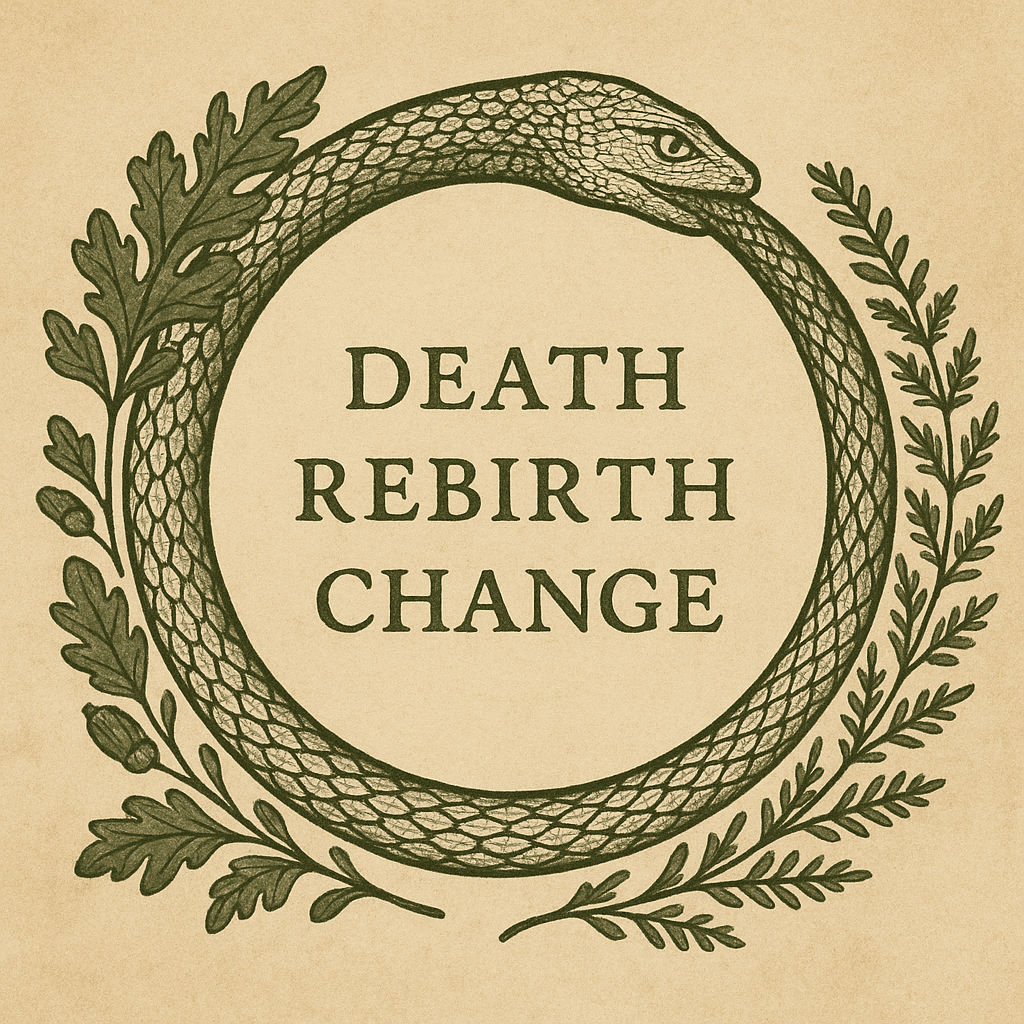
    Death is not a moment. It’s a pattern. A rhythm. A law that life is built up on.

    We’ve been conditioned to see death only as the closing of physical life, something far away, something that happens to other people, sometime later. But if we slow down and actually look. death is happening all the time, everywhere, and within us.

    There’s the death of childhood selves we’ll never meet again. The death of beliefs we no longer cling to. The death of relationships that ended quietly long before they were spoken about.

    Every time we say, “I can’t be this person anymore,” some part of us dies. And every time we breathe into a new truth, a rebirth begins. Without death we cannot have rebirth.

    Nature has always understood this. Trees don’t cling to leaves that have turned brittle. Flowers don’t apologize for wilting when their season is complete. The tide doesn’t negotiate with the sand. It withdraws, so it may return again.

    But humans? We hold. We delay the funeral of our past selves. We’d rather stay inside a familiar suffering than step into the unknown of an unlived life.

    Not because we don’t know how to change. But because no one ever taught us how to let things die.

    And yet, the version of you reading this is proof that you have already died many times, silently, courageously, without a ceremony. You are here because someone you used to be is no longer.

    Maybe death isn’t a single moment at the end. Maybe it is the sacred space between who we were and who we are becoming.

    Why Humans Resist Change

    If death is woven into every part of life, why do we resist it so fiercely?

    Because on some level – conscious or not – change feels like dying. Not the kind that stops a heartbeat, but the kind that dissolves identity.

    We aren’t only afraid of losing what we have, were afraid of losing who we are.

    The ego is built to protect us, to preserve what is known. It whispers, “Stay here. At least you know the rules. At least here you know who you are.” Even when “here” is painful. Even when “here” is a life lived on mute.

    So instead of ending things, we linger. We stay in jobs that drain the color from our days. We hold on to relationships that feel like shrinking. We keep wearing versions of ourselves that no longer fit.

    Not because it’s right, because it’s known.

    Resistance is not protection, it’s a cage made of our own fear.

    We tell ourselves were staying safe, but what we’re really doing is slowly abandoning the life that is trying to be born through us.

    This is why death, real, symbolic, internal, is sacred. Not because it’s easy. Not because it doesn’t hurt. But because it frees us to live without being half-alive.

    Grief is not the enemy of transformation. Avoidance is.
    Death as a Sacred Portal

    If we could see death the way the soul sees it, we would no longer call it an ending. We would call it a doorway.

    From the lens of the Law of One, nothing truly dies. Energy cannot be destroyed – only transformed. Life moves in spirals, not straight lines. We shift form, identity, body, and vibration. But at the core, we remain.

    Physical death is only one expression of this truth.

    “The catalyst of experience is designed to offer the death of that which is no longer needed. In surrendering, the entity steps into a more light-filled configuration of being.” -Ra

    This is death as alchemy. And when we allow these inner-deaths to happen consciously, when we meet them instead of resisting, something shifts.

    Death becomes holy. Grief becomes a teacher. Endings become thresholds.

    Hermetic teachings echo the same truth: “Nothing rests; everything moves; everything vibrates.” – The Kybalion

    Meaning: stagnation is the illusion. Movement is the reality. Death is movement. Change is movement.

    To fear death, in any form, is to fear our own becoming.

    The Art of Dying Before You Die

    Across ancient traditions, mystics and seekers were taught one thing before all else: Learn how to Die while you’re still alive.

    Not physically. But to let the false self – the ego, the stories, the attachments – dissolve before the final breath ever comes.

    Because those who have learned to die well…are the ones who truly learn how to live.

    This wisdom echoes through centuries:

    “Die before you die. There is no chance after.” – Rumi

    To Die before you die is:

    • Letting the performance fall away.
    • Letting the old self go without needing to hate it first.
    • Grieving what once was while choosing what now wants to be born.

    It doesn’t always come with ceremonies. Sometimes it looks like:

    • Finally telling the truth.
    • Leaving the life you built when you didn’t know yourself yet.
    • No longer abandoning yourself to be loved.

    It’s not glamorous. It’s not always peaceful. It often feels like heartbreak, emptiness, or standing in a field with no map.

    The Celts understood this, too. To them, death was not a punishment. It was a passage.

    “Every falling leaf returns to the soil to feed the roots of what will bloom.”

    So what if we, too, practiced endings with reverence? What if we learned to sit at the bedside of our old selves, not with shame, but with gratitude?

    The art of dying before you die is not morbid, it’s not bleak. It is the most courageous devotion to life.

    To release.

    To trust.

    To begin again.

    Rituals and Practices for Sacred Endings

    If death and rebirth are part of being human, then we need to learn not just how to survive them, but how to honor them.

    Ritual doesn’t have to be dramatic or mystical. It is simply a way of saying, “Something has ended. Something new is beginning. I choose to witness it.” It gives the soul a language the mind can understand.

    Here are gentle ways to practice dying, and beginning, with intention:

    • Name what is dying. Bring it into the truth. Whisper it, write it, cry it.
    • Write an obituary for your old self. Write about who you were, what they carried, how they kept you safe. Then release them. You can burn it, bury it, rip it up.
    • Fire- The Alchemy of Release. Write down the beliefs, narratives, or habits you are ready to let go of. Burn them in a fire safe bowl or bonfire. As the smoke rises, choose to breathe deeper instead of holding on.
    • Earth Ritual-Burial and Becoming. Bury something that symbolizes your old self. A letter, a piece of jewelry, a dried flower from a past chapter. Let the soil transform it, like leaves to roots.
    • Breath as a Practice of Dying and Rebirth. Every exhale is a tiny death. Every inhale is a rebirth. Try this: Breathe in – I receive life. Breathe out – I let go of what is gone. This is the smallest, simplest ritual and the most constant one.
    • Grieve Without Rushing to “Move on.” Let grief exist without stuffing it into productivity or timelines. Grief is proof that something mattered. Let it wash over you like a tide, not to drown you, but to make space for something new.

    Ritual doesn’t force change. It simply says: I’m willing. I’m listening. i’m not running from the end anymore.

    Living Fully Only Comes After You’ve Died a Little

    There is a strange kind of freedom that only comes after something has died.

    Not the freedom of running away, but the freedom of no longer pretending. Of no longer forcing yourself into a life, a role, a version of you that your soul quietly outgrew.

    When you allow part of yourself to die – a role, a story, an expectation – you make space for something wilder, truer, softer to take root.

    This is the part of death we don’t talk about: the aliveness that follows.

    Because when you’ve sat with endings, when you’ve been brave enough to let go of the version of you that was built for survival, you love differently. You choose differently. You stop wasting time on half-hearted living.

    When you no longer fear the loss of a life you don’t belong to anymore, that’s when you start belonging to yourself.

    Suddenly:

    • You say “no” without guilt.
    • You say “yes” without fear.
    • You love people because you want to, not because you’re afraid to lose them.
    • You live with a steady kind of courage, because you’ve already met death in small ways and survived.

    We only begin to live fully when we stop living life safely.

    Because death – in all its forms – is not here to take life from us. It’s here to give it back.
  • Finding Balance in Love and Adventure

    They say the magic happens outside your comfort zone…

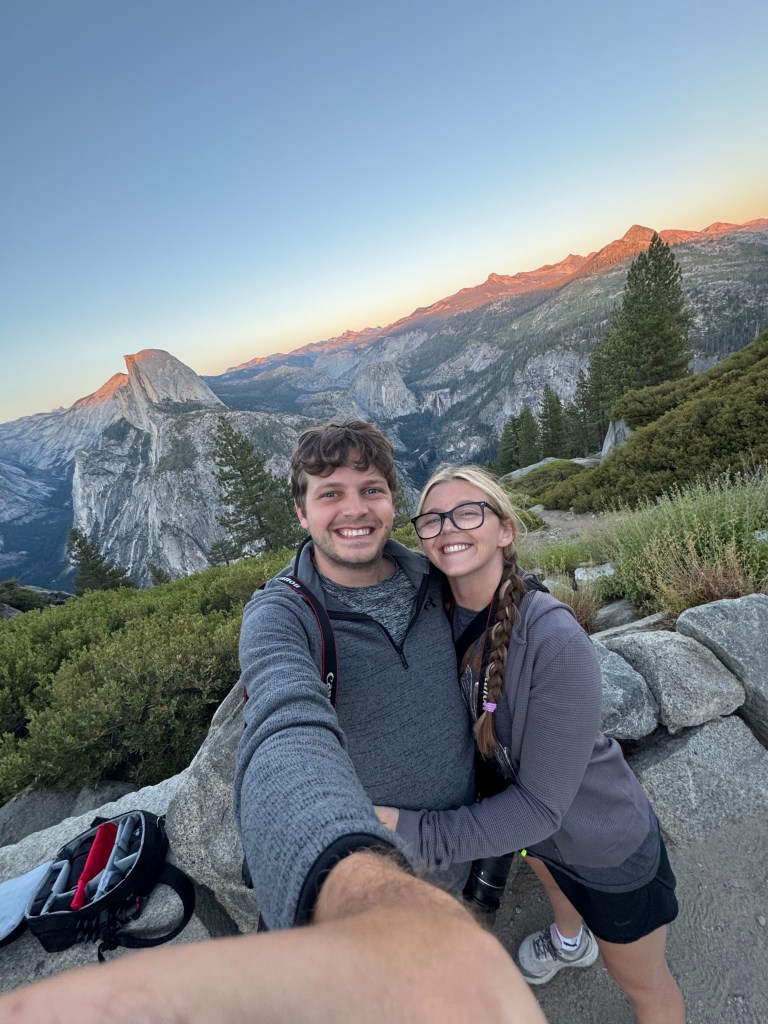
    There’s something about travel that pulls us out of our patterns. It asks us to see the world, and each other, in a different light. This trip to California my partner Nicholas and I took wasn’t just about the beauty of the land (although that was breathtaking). It was about learning about how two very different people can create something even richer when they choose to find love and meet in the middle. It was about how love grows when you choose to step outside your comfort zone, stay open to new experiences, and let differences be teachers instead of barriers. What unfolded between us in those days reminded me that balance isn’t something you find, its something you create together.

    Nicholas and I are very different. Especially when it comes to pace. He’s go, go, go, always ready for the next adventure. I’m more of a slow and savor kind of person..happy to cuddle in bed and take my time.

    It took a few days, a couple of constructive arguments, and some emotional moments to really find our balance. But when we did, it felt like something softened. He gave me the space to feel whatever I was feeling without taking it personally or trying to change it. And I gave myself the trust to adapt and lean into the moment without losing who I am. That’s where we could finally meet in the middle.

    In Yosemite’s beauty, we started to fall into a flow. He slows his steps so we could stop at the river and cool down. I tried things I might not normally do, just to be in the moment with him. We supported each other when the other was tired. We let each other just be without needing to “fix” anything.

    Our little tiny home tucked into the trees by the river felt like the most sacred place in the world. We cooked together, made fires, grilled hot dogs, drank wine under the stars, and let the stillness of night wrap around us. Being there just days before the full moon felt like a blessing.

    There’s this feeling that hits you sometimes, when you realize you’re exactly where you’re meant to be, growing in exactly the ways you were always meant to. And you see how having someone by your side who sees life the way you do, in the ways that matter most..it makes you braver. More willing to look at the harder parts of yourself, to understand them, and to love them.

    And maybe that’s what allows you to call in the truest, most beautiful version of yourself you’ve ever been.

  • Transforming Scarcity Mindset into Abundance

    One Thought at a Time

    Lately, I’ve found myself revisiting the same lesson again and again. How deeply I have been conditioned to expect the worst, to brace for struggle, to subconsciously believe that I have to earn my right to be okay.

    It doesn’t always scream at me.

    I’ll be halfway through the day and realize I’ve been running on autopilot- not entirely present, just going through the motions. I’ll think of a list of things I have to take care of, and instead of starting a task, I shut down.

    That’s the voice of lack too. For a long time, I didn’t recognize it. I thought that was just how I was wired.

    But the more I peel back the layers, the more I see that this is a freeze response, one I learned early on.

    From moments when I felt unsupported, when asking for help I didn’t feel safe, when emotions were too big for the room I was in. So my system coped by going quiet. By checking out.And even now, as an adult trying to rewire it all, my body sometimes still thinks it has to protect me that way.

    But I’m learning to meet those moments with compassion, not judgment.

    To say: You don’t have to disappear to be safe. You don’t have to be invisible to be loved. You’re allowed to take up space, even in stillness.

    And when I can remember that — even for a breath — I start to come back online.

    Not in a big, dramatic way. But in small, sacred ways that remind me:

    Abundance isn’t something I chase. It’s something I allow.

    The Power of “Catching It”

    It happens in fleeting moments. I’ll catch myself mid-thought, mid-worry, and pause. I don’t always feel better right away, but that pause is sacred. That’s when I reach for my reminders:

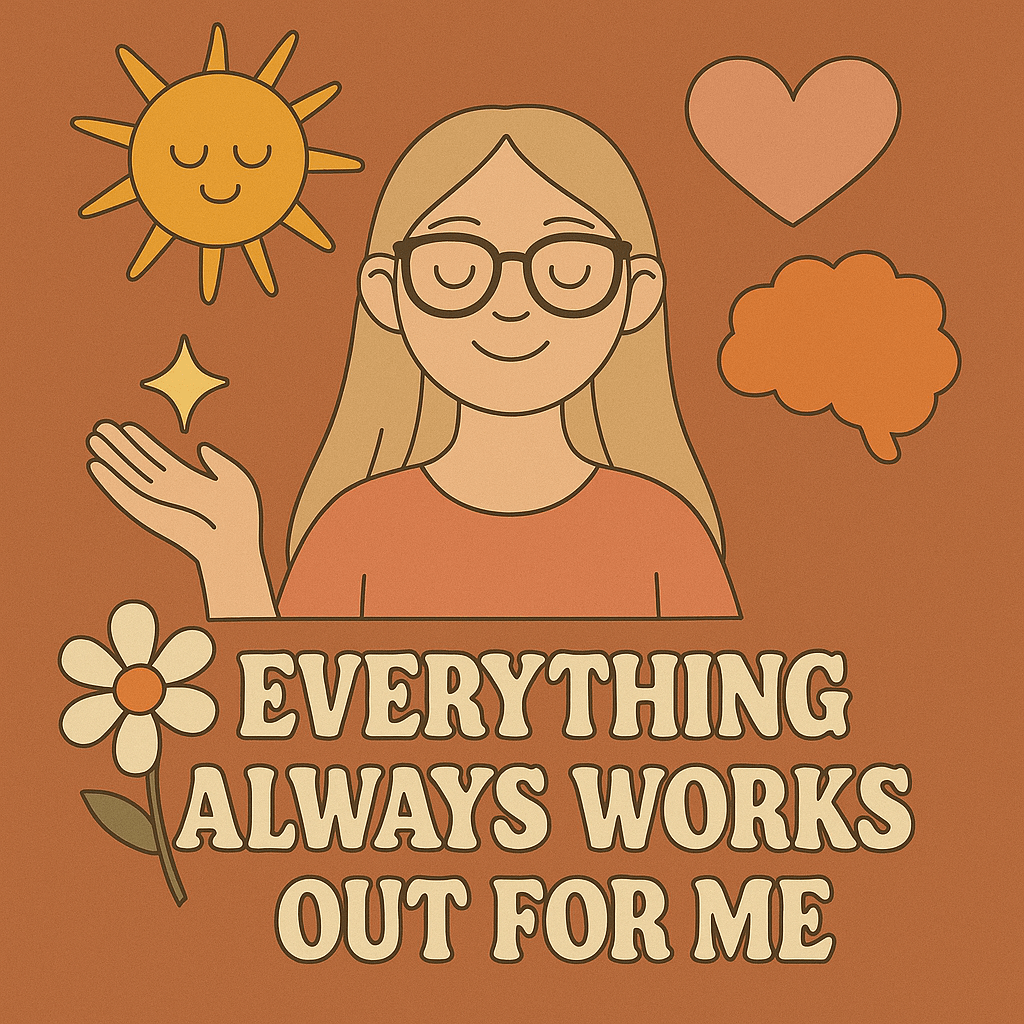
    “Everything always works out for me.”

    “I am supported. I am safe. I am provided for.”

    “I don’t have to hold it all. I can be held.”

    These words aren’t about pretending. They’re about remembering — if even for a breath — that abundance is already within me. Sometimes that’s all it takes to feel a soft shift, a glimmer of peace, like my nervous system just unclenched a little.

    And to me, that glimmer is everything.

    Rooting Down to Rise Up

    As I do this work, I’ve been drawn to my root chakra more than ever. It makes sense, the root is all about safety, trust, and the right to exist in peace. For most of my life, that’s felt like something I had to prove or earn. But I’m realizing now… I don’t.

    Balancing this energy isn’t about being perfect. It’s about presence.

    I’m learning to feel into my body more. Noticing where the tension lives, slowing down my breath, stepping barefoot into the grass when I can. These small acts help rewire the story that I’m alone or unsupported.

    Because I’m not. And neither are you.

    I’m Not “Fixing” Myself — I’m Loving Myself

    Maybe that’s the biggest shift of all.

    For so long, I thought healing meant removing the fear. That if I still had doubt, or stress, or scarcity pop up, I must not be doing it right.

    But now I see that healing isn’t about elimination.

    It’s about relationship. With myself. With my thoughts. With the parts of me that still get scared sometimes.

    I’m not trying to force myself into fake positivity. I’m not slapping affirmations over wounds I haven’t acknowledged.

    I’m learning to listen — gently. To notice when my inner child is afraid and offer her safety, not shame.

    To slow down just enough to whisper:

    “I see you. You’re allowed to feel this. And you’re still safe. You’re still loved.”

    Lack still visits me sometimes, but I don’t build a home for it anymore.

    I don’t feed it. I don’t let it drive.

    Instead, I light a candle for truth. I breathe deeper. I come back to presence. I affirm again, not to fix myself, but to love myself back into remembrance.

    And honestly? That’s the most abundant thing I’ve ever done.

    For You, If You’re Walking This Too

    If you’re doing this work, rewiring your beliefs, learning to trust the unknown, remembering that you’re worthy just by being alive — I want you to know something:

    You’re doing beautifully. Even if it feels messy.

    Even if you have to remind yourself a hundred times a day.

    Even if abundance feels far away.

    It’s closer than you think.

    It lives in the breath you’re taking right now.

    It lives in your willingness to keep showing up.

    A Few of My Favorite Daily Reminders:

    • Everything always works out for me.
    • I am safe to rest.
    • I am always supported and provided for.
    • I am rooted. I am rising.
    • I am already enough.
    • I trust the unfolding.
  • Beyond Judgement

    Seeing the Divine Within All

    There is a truth the heart knows, but the mind sometimes forgets.

    Actions may become distorted.

    Souls remain divine.

    We are invited to see beyond the veil of judgement into the deeper memory of Oneness.

    Distortion Is Not Identity

    When we encounter cruelty, selfishness, or harm, in others, or in ourselves, it is easy to collapse it into labels: “Good” “Bad” “Worthy” “Unworthy”

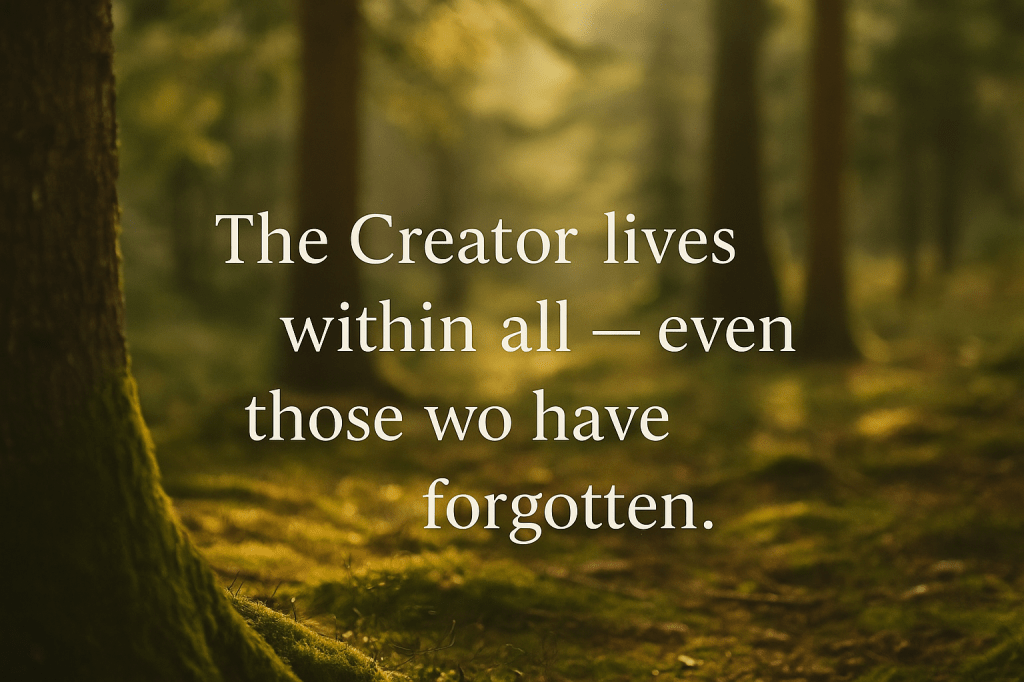
    But distortion is not identity. It is forgetting. It is the result of pain, fear, and disconnection wrapping around a light that has never been extinguished.

    The soul remains whole.

    The soul remains divine.

    Even when forgotten.

    When we realize distortion is not the souls truth, we stop making enemies of others. We stop making enemies of ourselves.

    We can witness pain, fear, anger, without merging with them or defining anyone by a single moment.

    Judgement Builds Walls. Understanding Builds Bridges

    Every judgement we hold against another, or against ourselves, is a stone we place in a wall around our hearts.

    Understanding does not mean agreeing. It means refusing to imprison the heart behind barriers of fear. Judgement says, “You are your mistake.” Understanding says, “You are learning. You are still light.”

    When we choose understanding, we choose to remember. Everyone is walking their own sacred, messy, beautiful journey home to Source.

    We Do Not Excuse Harm, We Remember Love

    Accountability matters.

    Boundaries matter.

    Choosing wisdom matters.

    But our deeper work is to see through distortion without letting it shatter our remembrance of Oneness.

    Love does not blind itself to pain.Love sees pain clearly – and still chooses compassion. Love sets necessary boundaries – without hatred. Love holds truth and compassion in the same hand.

    We are not called to excuse cruelty. We are called to refuse to let cruelty destroy our ability to love.

    Even Those Lost in Distortion Are Walking Home

    Some lessons are learned through joy. Some are learned through sorrow. Some are learned over many lifetimes of forgetting.

    All journeys eventually lead home.

    We are not here to “save” anyone. We are not here to “fix” anyone. We are here to witness the Divine spark still glowing, even when its buried beneath layers of pain.

    We are here to remember. For ourselves. For others. For the whole.

    Real Life Reflections

    In daily life, this remembrance invites us to soften:

    • When we see someone lashing out in anger online, we can pause and remember, “They are still learning, just like I am.”
    • When a loved one speaks from fear instead of love, we can set boundaries if needed- but also recognize the hurt beneath their harshness.
    • When public figures act from distortion, we can hold them accountable without reducing them to their worst moment.
    • When we judge ourselves harshly, we can whisper: “I am divine even in my imperfection. I am still walking home.”

    The more we practice, the more the walls fall away. And bridges of light are built in their place.

    How Do We Practice Seeing the Divine Within All?

    Small, powerful ways to integrate this truth daily:

    • Pause before reacting:

    When triggered by someones behavior, breathe. Ask yourself: “What fear or pain might be hiding underneath?”

    • Bless instead of curse:

    When encountering harshness, silently offer a blessing. “May you remember your own light, and I remember mine.”

    • Forgive yourself first:

    When you fall short of your own ideals, place a hand on your heart and say: “I am still divine. I am still learning. I am still worthy of love.”

    • Practice sacred vision:

    Each day, try to see at least one person – stranger, friend, or yourself – not through the lens of actions, but through the lens of eternal spirit.It is not built by ignoring darkness.

    It is built by facing it with clear eyes, and choosing love anyway.

    The Great Remembering is not naive.

    It is courageous.

    It is the choice to hold both truth and compassion together

    and to walk forward, remembering that every soul — every single one —

    is a part of the journey home.

    You Are Divine.

    They Are Divine.

    All Are Walking Home.

    May we meet each soul, including our own, with the eyes of remembrance.

    Not by excusing harm.

    Not by collapsing into separation.

    But by anchoring the truth:

    We are One.

    We are Love.

    We are remembering.

    Adonai.