That’s really all affirmations are, simple reminders of truth.When life gets heavy, when old patterns show up, when fear tries to run the show- affirmations help you remember.
They aren’t about forcing yourself to believe something fake. They’re about bringing your mind back into alignment with what’s already true underneath all of the noise.
Why Affirmations Work
Your mind is constantly recording what it hears, even if you’re not aware of it. The more a thought repeats, the more your brain wires itself around it. That’s how patterns get built- both helpful ones, and unhelpful ones.
Affirmations are a way of consciously choosing what you’re repeating. You’re offering your mind new material, thoughts that are rooted in your power, not your fear.
The brain doesn’t care whether a thought is empowering or disempowering. It just builds around whatever it’s given. Affirmations give you a way to hand your mind something empowering to build around.
How to Use Affirmations
Say them out loud — hearing your own voice speak truth is powerful.
Write them down — let your hand move the energy onto paper.
Put them where you’ll see them daily — mirrors, phone backgrounds, sticky notes.
Use them when doubt shows up — that’s when they’re most needed.
Breathe them in like little prayers — not rushed, but felt.
And most importantly:
Consistency > Perfection.
You don’t have to “feel it” every time. You don’t have to get it “right.”You just have to keep giving your mind new material to work with.
And before you know it, you’re faced with a situation that once would have brought you to your knees, but now, you’re fully equipped to handle any emotion that comes your way.
I remember the first time I noticeably changed the direction of my thinking, ironically after spilling an entire gallon of milk on the kitchen floor (don’t cry over spilled milk) I decided to laugh at the situation instead of let it alter the course of my day and mindset. I felt empowered and gained so much confidence in myself at that moment.
It takes twenty one days to form a habit. If you choose to change any habit, I encourage you to start here. Because once you can change your mindset, you can change anything.
A Few to Work With
Here are some simple ones to try:
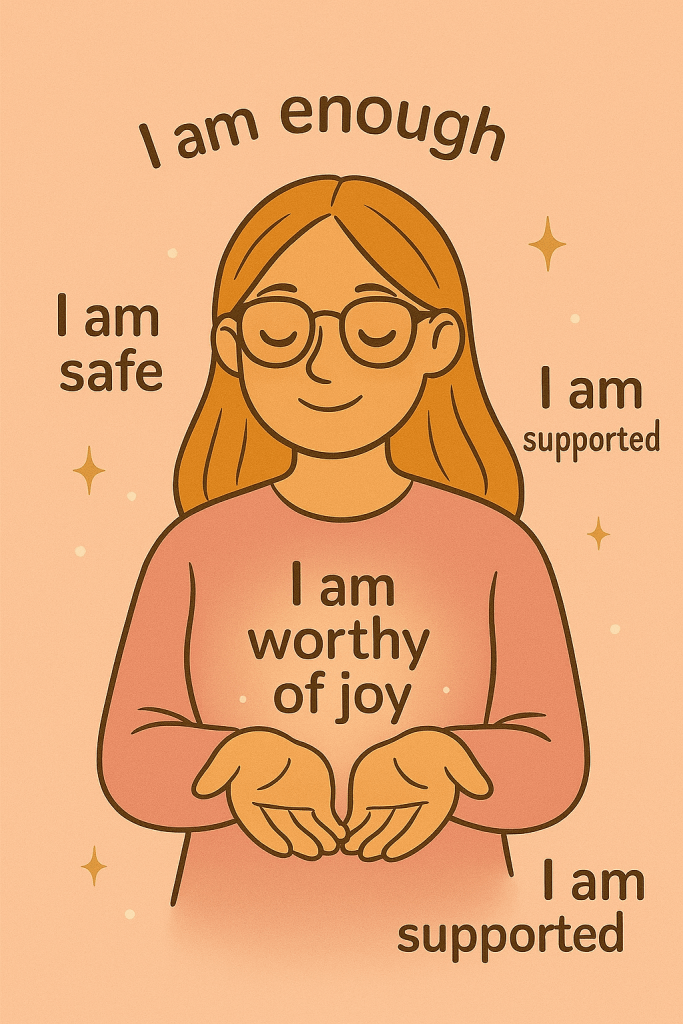
I am enough — right now, exactly as I am.
I am safe.
I am worthy of joy.
I am becoming who I came here to be.
I am supported in every moment.
Final Reminder
You’re not making something true.
You’re reminding yourself what’s been true all along.
Here are a few of my favorite Affirmation tools I use daily:
You know that feeling. The ache in your chest, the tightness in your throat.The endless loop of thoughts that say, “I know I need to do something… but I cant seem to move.”
Maybe it’s a decision you’ve been avoiding. Maybe it’s a conversation. A new chapter. A dream. Something inside you is whispering “it’s time.” But instead of action, you freeze. You scroll. You sleep. You overthink. You numb.
And then the guilt sets in, because you know better, right? You know growth is on the other side, you’ve read the quotes. You’ve heard the pep talks. But still, something about taking that first step feels absolutely terrifying.
Let me tell you something that might change everything. Taking action when you’re stuck might be one of the bravest things you’ll ever do. And the fear you feel? That’s not weakness. That’s a sign that the step you’re about to take… matters.
This isn’t a post about pushing through. This is a love letter to the part of you that’s scared—and still willing. The part that wants a life that feels whole and honest and alive. The part that knows you can’t stay in this place forever.
If you’re reading this, it means something in you is already shifting.
Let’s talk about why taking action is so scary—and how to do it anyway, with grace, with truth, and maybe even a little bit of magic.
Why Taking Action Feels So Scary
Here’s the truth no one really talks about:
Action isn’t hard because you’re lazy. It’s hard because it changes everything. When you take action—even the smallest step—you’re signaling to your body, your mind, and your soul: “We’re not doing things the old way anymore.” And that’s terrifying.
Not because you don’t want change… But because part of you still clings to the comfort of the known. Even if the known is miserable. Even if it’s holding you back. It’s familiar. And the familiar is safe, even when it’s slowly suffocating you.
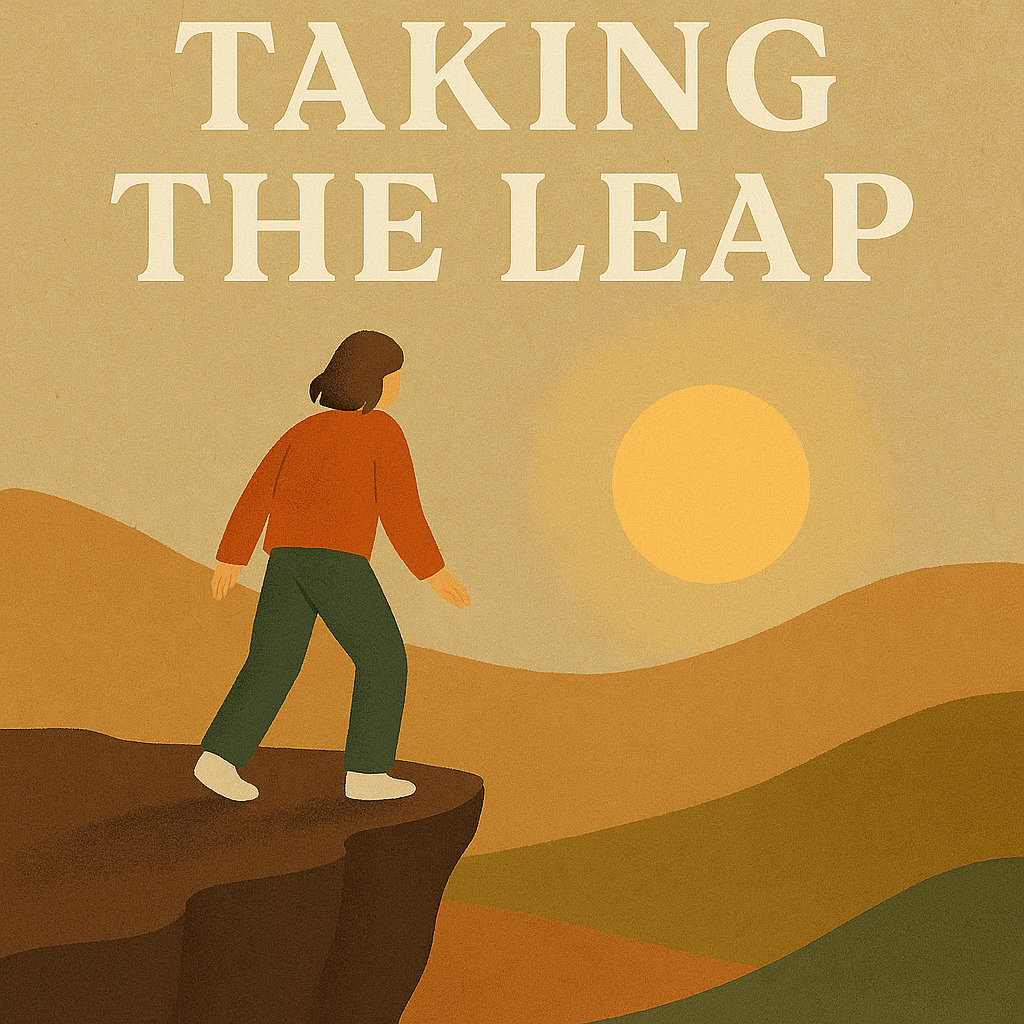
Taking action—real, soul-led action—means risking discomfort. It means risking failure. Or judgment. Or success. (Yes, that can be just as scary.) It means standing at the edge of the cliff and deciding to jump… even when you don’t know if the wings will appear before the ground does.
But here’s what’s even scarier:
Staying stuck. Shrinking. Betraying yourself by doing nothing. That silent ache that follows you day after day, whispering “this isn’t it.”
You’re not scared because you’re weak. You’re scared because the version of you on the other side of this choice is bigger. Brighter. Freer. And stepping into her means leaving behind all the versions of you who settled for less.
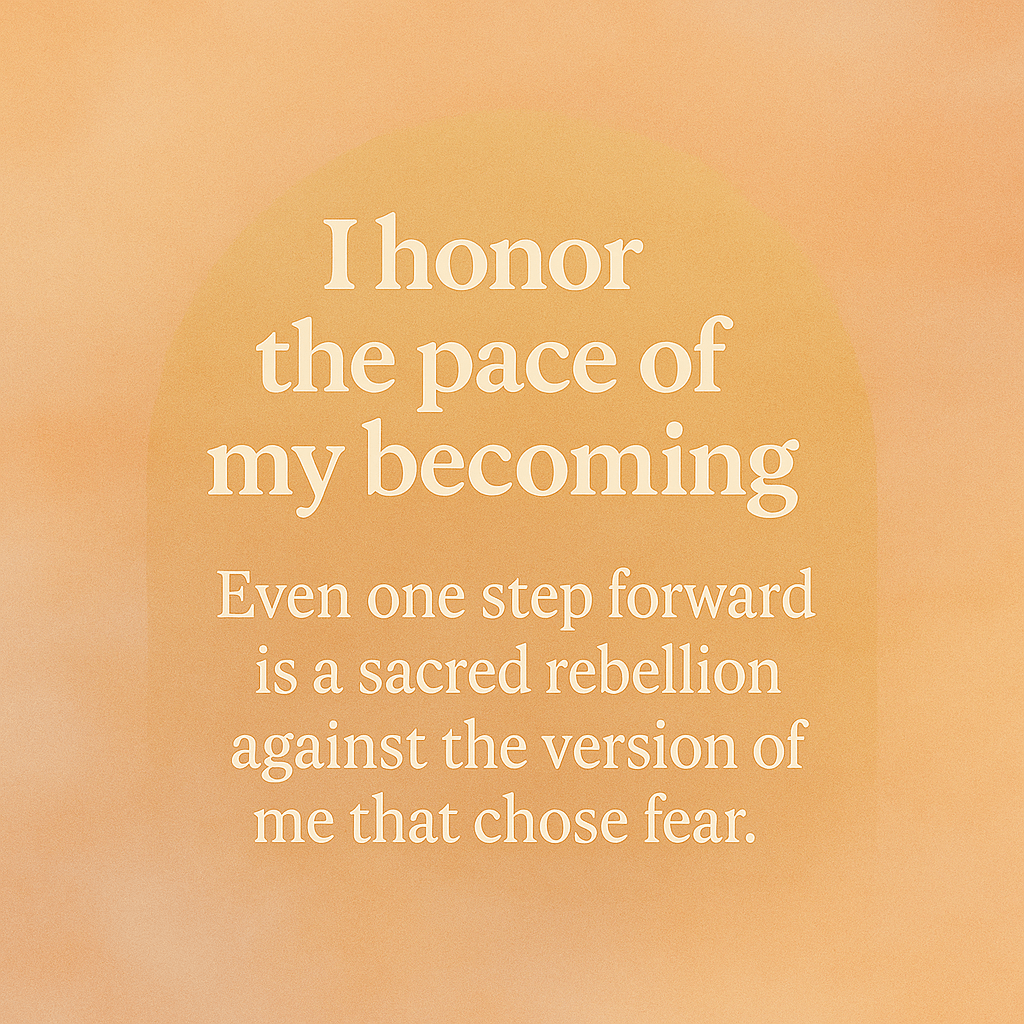
You don’t need to leap. You don’t even need to run. But you do need to move. And sometimes that starts with a breath. A text. A journal entry. A yes. That’s how momentum builds.
This fear is not the end.
It’s the beginning of your return.
Reframing The Fear
What if fear wasn’t something to fight… but something to listen to?
What if it wasn’t a stop sign, but a signal that something meaningful is waiting just beyond your comfort zone? Before every big change in life, there’s usually a quiet moment of reckoning. First comes awareness.
The realization that you’re repeating the same cycles. Making the same choices. Feeling the same ache. And suddenly, you just… can’t unsee it anymore.
It’s in that moment—when the old way becomes too painful to bear—that transformation begins. But right after awareness? That’s when fear arrives. Not because you’re broken or weak—but because something deep inside you knows: If I follow this path, I won’t be the same person on the other side.
And that’s scary.
But fear doesn’t mean stop. Fear means this matters. You don’t need to shame it, fight it, or try to shove it down. You can look it in the eye. Acknowledge it. Thank it for trying to protect you.
And then love yourself enough to say:
“I no longer live here. I’m choosing something higher.”
Fear isn’t here to rule you. It’s here to remind you that the leap you’re about to take is real. It means you’re not sleepwalking anymore. You’re awake.
And that changes everything.
How To Move Forward When You’re Frozen
Let’s be real—when you’re in that stuck place, advice like “just do it” feels insulting. Because if it were that easy, you would’ve done it already.
You don’t need pressure. You need permission. Permission to move slowly. Gently. In a way that honors your nervous system and your soul.
So if you’re frozen right now, here’s what I want you to know: You don’t need to take the big leap today. You just need to lean forward.
Here are a few soul-led ways to begin:
1.
Start Smaller Than Small
If the step you’re imagining feels too big, it probably is. Shrink it. Shrink it again. Until it feels almost… laughable. That’s the one. Tiny movement still creates momentum. And momentum dissolves fear.
2.
Create Ritual Around the Step
Infuse your action with intention—it helps the body feel safe.
Light a candle.
Say a prayer or affirmation.
Ask your guides to walk with you.
3.
Ground Yourself in the “Why”
You’re not doing this because someone told you to. You’re doing it because the old way no longer fits. Remember why you’re ready to grow.
4.
Speak to the Fear with Love
“I see you.”
“I understand why you’re here.”
“But I’m choosing something different now.”
Every time you choose love over fear—even in thought—you shift your path.
5.
Celebrate the Step—Even If It’s Invisible to Others
Some of your bravest moves will happen in private. Celebrate them anyway. Honor the version of you who showed up, even when it would’ve been easier to stay asleep. Because that version? She’s the one leading you home.
It’s Time To Soar
With each step you take, no matter how small, everything shifts.
Your energy changes. Your timeline bends. Your future softens and expands to meet the version of you who dared to move. It doesn’t have to be dramatic. It doesn’t have to be perfect. It just has to be true.
Because even the tiniest step toward the new version of yourself is a step back home.
You will never feel fully ready. That’s the point. Comfort wants you to stay where you are. But you didn’t come here to stay small.
So look comfort in the eyes and say:
“Thank you for protecting me. But it’s time for me to grow. It’s time for me to soar.”
Start where you are.
Move gently.
Move honestly.
Move with love.
Because you’re not stuck.
You’re standing at the edge of your becoming.
And I promise—on the other side of this fear, there’s freedom.
There are seasons in life when everything feels tender. Maybe something ends. Maybe something begins. Maybe nothing on the outside has changed, but inside, something is stirring. It’s easy to wonder what’s going wrong. Why the ache, the uncertainty, the unraveling. But what if it isn’t a sign that we’re breaking down? What if it’s a sign that we’re breaking open?
There’s a term I’ve come to love for these moments: Catalyst. A term I first encountered through the lens of spiritual study, but one that applies to life no matter your belief system. Catalyst is anything that shakes us, stirs us, or stretches us. Not because we’re being punished, but because we’re being shown something. Something we’re ready to see, feel, or become.
Catalyst Comes in Many Forms
Catalyst doesn’t always arrive like lightning. Sometimes it tiptoes in, disguised as a new relationship, a big opportunity, a conversation you cant forget. Sometimes it shows up as someone who triggers you. Sometimes its joy that cracks you open- and sometimes its grief that does the same. Catalyst can be found in endings, beginnings, boredom, chaos, stillness, or even that one sentence someone said that keeps echoing in your mind. It’s not the form it takes that matters, it’s what it activates in you.
Our First Response: Resistance and Fixing
Before we consciously invite growth, we often unconsciously summon it. We manifest the people, places, and patterns that stir the sleeping parts of us. Not to punish ourselves, but because some part of us is ready to remember it. Ready to feel. Ready to heal.
But when catalyst arrives, especially in the beginning, our first instinct is usually to resist. To fix it. To control it. To ask: “How do I get back to how things were?” It’s only with time (and a lot of grace) that we begin to ask a different question: “What is this here to show me?”
Presence Over Perfection
When we stop trying to escape the discomfort, a new kind of space opens within us. A space where we can listen. A space where we can ask: What part of me is waking up through this? Sometimes the answer comes easily. Sometimes it takes months, years, or even decades to fully unfold.
Catalyst often asks for something we don’t expect: not action, not immediate understanding- but presence. A willingness to stay open even when it hurts. A willingness to hold ourselves tenderly in the uncertainty, trusting that meaning will reveal itself in time.
Because Catalyst is rarely about the surface event, it’s about what the event activates inside of us.
Conscious Catalyst
There comes a moment, sometimes quiet, sometimes profound, when we realize that life isn’t happening to us, it’s happening for us. It’s not that the pain disappears overnight. It’s that something inside of us shifts. Instead of asking, “Why is this happening to me?” we begin to ask, “What is this awakening in me?”
This is the moment the catalyst transforms from something we fear into something we can work with. We stop resisting the discomfort and start listening to it. We stop trying to fix ourselves and start honoring the ways we are being reshaped. After all, that’s why we came here!
Conscious catalyst doesn’t mean we stop feeling pain. It means we stop making pain the enemy. We recognize it for what it is: a teacher, a messenger, a bridge.
And in that recognition, we step into our power. Not the power to control life, but the power to co-create with it.
Empowerment in Practice: How to Trust the Catalyst
Trusting the catalyst doesn’t mean forcing yourself to enjoy the discomfort. It doesn’t mean pretending you’re fine when you’re not. It means giving yourself permission to become aware within the experience, instead of collapsing under it.
When I was recently in a car accident, I was faced with a choice. I could have let fear and scarcity take over- believing I had lost something essential, that I had fallen behind, that life was working against me. But instead, I chose to trust. I chose to believe that I could always have what I need. That even when things seem to fall apart, something greater is being built. That worry and stress were not my true guides- faith was. And through that trust, I found peace in the unknown.
Catalyst invites all of us into that same choice. Not once. But again, and again, and again.
Here are a few ways to gently walk with catalyst when it arrives:
Reflect instead of react: When something stirs a big emotion or unexpected shift, pause. Before labeling it “good” or “bad” simply ask: “What might this be showing me?” Sometimes the insight is immediate. Sometimes it unfolds slowly. Trust the timing.
Feel instead of fix: Pain often asks to be felt, not solved. Instead of rushing to change your circumstances, allow yourself to sit with the feeling. “What does this emotion want me to know?”
Trust timing instead of forcing outcomes: Catalyst rarely delivers neat, fast answers. Growth is a spiral, not a straight line. “What if this moment is planting seeds I cannot yet see?”
Trust that the meaning will reveal itself when you’re ready to receive it.
You are not failing if you feel discomfort. You are not falling apart if you feel unsure. You are becoming. You are unfolding into the fullness of you you already are.
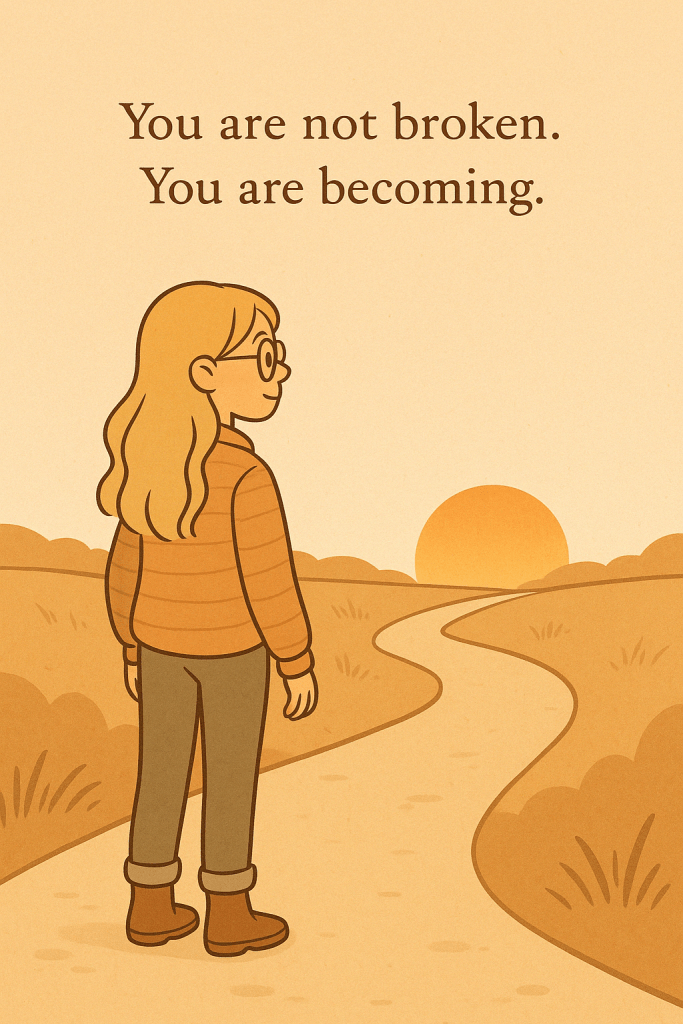
You Are Not Broken, You Are Becoming
Every moment of discomfort you have survived has shaped the depth of who you are. Every catalyst you’ve walked through has expanded your ability to love, to listen, and to live more fully.
You are not broken because you have struggled. You are not lost because you have grieved. You are not failing because you sometimes feel afraid.
You are becoming.
Catalyst doesn’t come to prove your inadequacy, it comes so you can finally realize you are already whole. It comes to reveal your resilience. It comes to show you that even when life rearranges itself around you, the core of who you are remains steady, whole, and worthy.
The next time something stirs you, shakes you, or challenges you, I invite you to pause. Take a breath. Place a hand over your heart. And ask yourself:
“What if this, too, is part of my becoming?”
You are stronger than you know. You are wiser than you realize. And you are exactly where you are meant to be.

 Sacred Pathways